






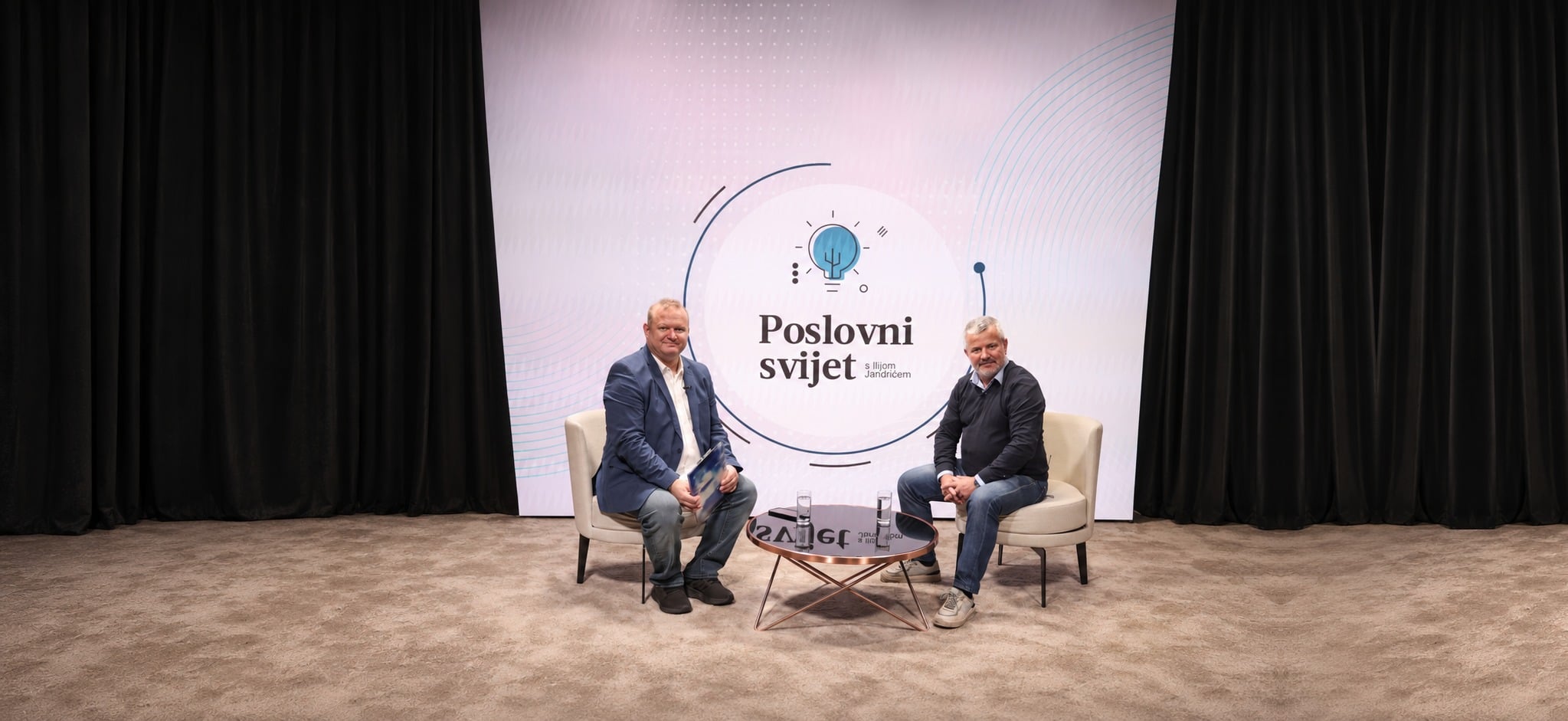
Darin Janković, Head of Business Development for the Adriatic region at Autobahn Technologies, joined journalist Ilija Jandrić on the business podcast “Poslovni svijet” to discuss Chinese car brands, electrification and the future of automotive retail. His perspective on digitalisation begins with the people on either side of a sale: what customers need and how salespeople spend their time.
Connecting the work behind a familiar purchase
A customer researches a car, compares alternatives, takes a test drive, asks for an offer, arranges financing and collects the vehicle. When asked how Autobahn changes that experience, Darin began by pointing out how familiar those steps remain.
The difference lies in how the seller handles them. Customer details may sit in a customer relationship management system, test drives in a separate calendar, invoices in another system and stock records in a spreadsheet. Keeping one sale moving means working across all of them.
“Autobahn was built to bring all those systems under one roof,” he explained. “There’s no jumping from system to system.”
Autobahn is a vehicle sales platform for importers and dealers, connecting customer enquiries, vehicle information, stock, offers, orders and handover. Darin described the practical value in terms of fewer enquiries being lost, customers receiving answers sooner and a more transparent sales process.
A car is still a personal choice
Customers have much more information available before they speak to a salesperson. Reviews, videos and online comparisons allow them to arrive knowing a great deal about the vehicles they are considering.
“Buying a car is both emotional and rational, and it will always be that way,” Darin said.
His own choice of car makes that point particularly well.
“I’ve been driving one car brand for years because the gear lever is exactly where I need it to be. In another car, it’s half a centimetre further back, and that bothers me.”
He expects online vehicle sales to grow, while remaining convinced that showrooms and salespeople will retain their importance. Sitting in a car, experiencing how it feels and hearing someone talk through the choice are parts of the purchase he believes customers will continue to value.
Giving AI a practical job
Asked whether AI would eventually replace the salesperson, Darin said he did not expect it to. He described a philosophy Autobahn calls Smart Sales, which starts by examining where AI could help with the work surrounding the customer conversation.
“We look at how to shift the administrative side of car sales to AI and enable the salesperson to build a relationship with the customer,” he explained.
The discussion also explored how that thinking applies to aftersales. Darin used spare-parts planning as an example: a workshop needs to consider how many parts remain in stock, how long replacements take to arrive and how demand changes through the year.
In his example, two shock absorbers remain, delivery takes four days and seasonal usage helps determine the next order. The useful recommendation accounts for those factors together, including how much money would be tied up in ordering more parts than necessary.
He also identified lead qualification as an area Autobahn is exploring. A person showing interest in a car on social media is not necessarily ready to buy it. Understanding that difference is a more difficult task, and Darin spoke about the potential to develop algorithms that could help sales teams assess those enquiries.
These examples give his view of AI a concrete focus: the tasks it could help people handle and the decisions it could help them make.
Watch the full interview on YouTube. The conversation is in Croatian. You can also read Poslovni dnevnik’s coverage.
Quotations translated from Croatian and lightly edited for clarity.